
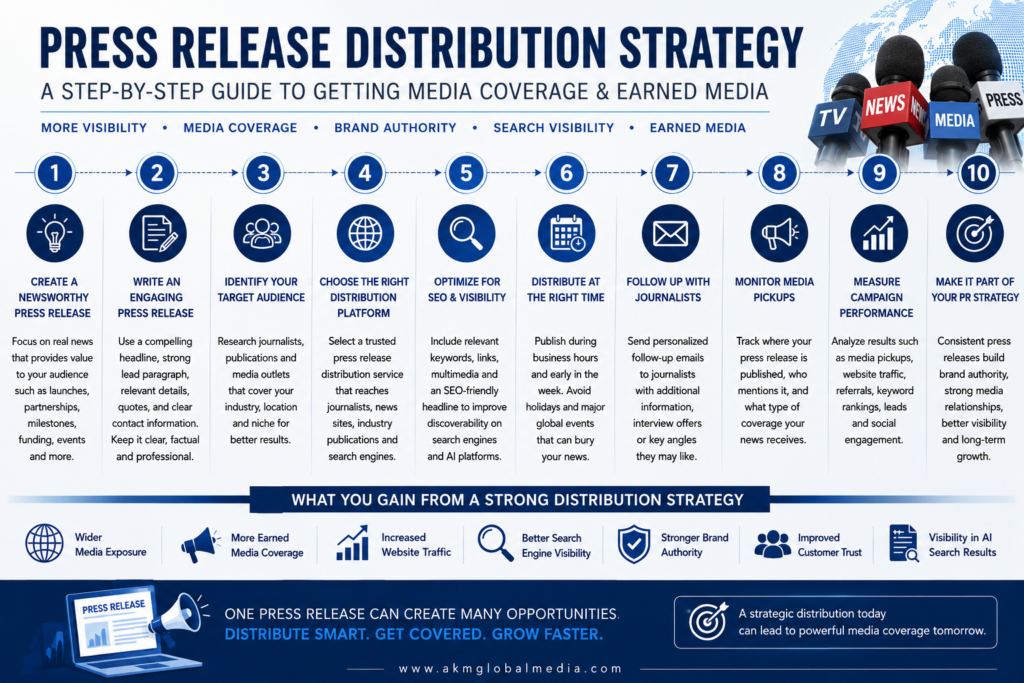
Getting your press release published is only the beginning. The real success of a press release lies in how effectively it reaches journalists, news websites, industry publications, and your target audience.
Many businesses spend time crafting the perfect press release but overlook one crucial element—distribution. Without a strategic distribution plan, even the most newsworthy announcement can go unnoticed.
Whether you’re launching a new product, announcing a partnership, sharing company milestones, or promoting an event, the right distribution strategy can significantly improve your chances of earning media coverage, increasing brand visibility, and driving website traffic.
This guide walks you through the complete press release distribution process, from preparing your announcement to maximizing media pickups and measuring success.
Step 1: Create a Newsworthy Press Release
Before thinking about distribution, make sure your press release contains information that journalists and readers genuinely care about.
Common topics that deserve a press release include:
- Product or service launches
- Business acquisitions or partnerships
- Funding announcements
- Company milestones
- Awards and recognitions
- Events and conferences
- Executive appointments
- Industry research or reports
Focus on providing valuable information rather than creating promotional content. Journalists are more likely to cover stories that are timely, relevant, and informative.
Step 2: Write an Engaging Press Release
A professionally written press release increases the likelihood of media interest.
Your press release should include:
- A compelling headline
- A strong opening paragraph answering who, what, when, where, why, and how
- Supporting details and statistics
- Quotes from company executives or industry experts
- Company background
- Media contact information
Keep the language clear, factual, and easy to understand. Avoid overly promotional wording and focus on the news value.
Step 3: Identify Your Target Audience
Not every journalist covers every topic.
Before distributing your press release, determine who is most likely to be interested in your story.
Consider factors such as:
- Industry
- Geographic location
- Publication type
- Journalist beat
- Target customers
A technology announcement should reach technology reporters, while a healthcare update should be shared with healthcare publications and journalists.
Targeted distribution almost always delivers better results than mass distribution.
Step 4: Choose the Right Press Release Distribution Platform
Selecting the right distribution platform plays a major role in your campaign’s success.
Professional press release distribution services help your news reach:
- News websites
- Journalists
- Industry publications
- Online media platforms
- Search engines
- AI-powered discovery platforms
Using trusted distribution networks increases the likelihood that your press release will be discovered by relevant media outlets and publishers.
Step 5: Optimize Your Press Release for SEO
Press releases are no longer written only for journalists—they also help improve online visibility.
Optimize your release by:
- Including relevant keywords naturally
- Writing an SEO-friendly headline
- Using descriptive subheadings
- Linking to important website pages
- Adding images or multimedia where appropriate
SEO optimization helps your announcement remain discoverable long after publication.
Step 6: Distribute Your Press Release at the Right Time
Timing can significantly influence media coverage.
Consider publishing your press release:
- During business hours
- Early in the week
- Before major industry events
- Around product launches
- Before important company announcements
Avoid distributing news during major holidays or when significant global events may dominate media attention.
Step 7: Follow Up with Journalists
Distribution should not be the final step.
After publishing your press release, send personalized follow-up emails to journalists who regularly cover your industry.
A polite follow-up can:
- Draw attention to your announcement
- Offer additional information
- Arrange interviews
- Increase the chances of editorial coverage
Always keep follow-ups brief and professional, respecting journalists’ busy schedules.
Step 8: Monitor Media Pickups
Once your press release is distributed, track where it appears.
Media pickups may include:
- Republishing on news websites
- Coverage by journalists
- Mentions in industry blogs
- Interviews
- Podcast appearances
- Social media discussions
Monitoring these results helps you evaluate the effectiveness of your PR campaign.
Step 9: Measure Campaign Performance
Successful press release campaigns generate measurable business results.
Key performance indicators include:
- Number of media pickups
- Website traffic
- Referral visitors
- Brand mentions
- Search engine visibility
- Lead generation
- Social engagement
- Earned media coverage
Regular performance analysis helps improve future campaigns.
Step 10: Make Press Release Distribution Part of Your PR Strategy
The most successful brands don’t publish just one press release each year.
Instead, they consistently share company updates, industry insights, product launches, and achievements throughout the year.
A long-term distribution strategy helps businesses:
- Build brand authority
- Increase media relationships
- Improve online reputation
- Strengthen SEO
- Expand digital presence
- Gain consistent earned media
Over time, this creates stronger visibility across search engines, AI-powered platforms, and trusted media outlets.
Final Thoughts
An effective press release distribution strategy is about more than simply publishing news. it’s about ensuring your story reaches the right audience, earns media attention, and supports your long-term marketing goals.
By following a structured approach from creating a newsworthy announcement to targeting the right journalists, optimizing for SEO, and tracking performance, you can significantly improve the impact of every press release.
At AKM Global Media, we help businesses maximize the reach of their announcements through strategic press release distribution, digital PR, media outreach, and content marketing solutions that deliver measurable results.